
Loading...
Serving Prescott Valley, AZ and surrounding areas. (928) 458-7263
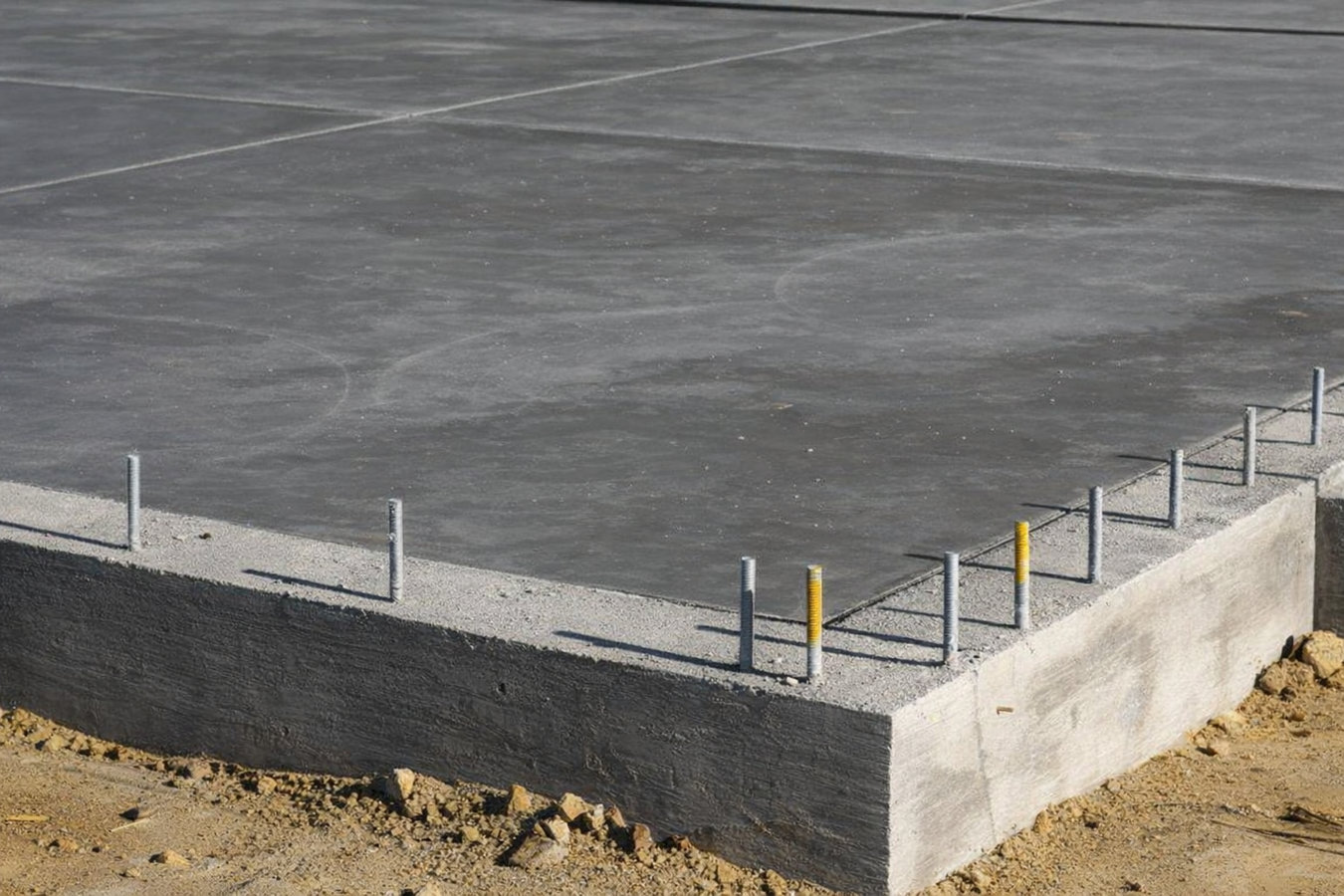
Your foundation is the one part of your home you will never be able to redo easily. Get it right the first time with proper site prep, rebar, and a pour timed for Prescott Valley's climate.
Slab foundation building in Prescott Valley means preparing your lot, setting rebar, routing any buried plumbing, and pouring a single concrete base that becomes both the floor and the structural platform for your home. Most residential slabs are four to six inches thick with reinforced edge footings, and most jobs run one to two weeks once the permit is approved.
If you are building a new home, adding a garage, or putting up a room addition, the slab is the first concrete work that has to happen - and it is the most consequential. Prescott Valley's clay-heavy soils and seasonal monsoon moisture make proper ground preparation more important here than in many other parts of Arizona. Skipping steps on the base is the most common cause of slab cracking years later.
We also handle concrete footings for structures that need deeper support, so if your project calls for more than a standard slab, we can cover that too.
If you are breaking ground on a new home, detached garage, or room addition, you need a foundation before anything else. The slab is not optional - it is the starting point. Your contractor will confirm the right design after reviewing your lot and soil conditions.
Hairline cracks in concrete are normal. But if you can fit a quarter into a crack, or cracks run diagonally from door corners, the slab has moved. In Prescott Valley, this kind of movement is often tied to clay soils that swell after monsoon rains and shrink in dry months. A contractor can assess whether the damage is cosmetic or structural.
When a slab shifts, the walls above it shift too. If doors that used to swing freely now drag on the floor, or gaps are forming at the tops of door frames, the foundation may be moving unevenly. This symptom is worth taking seriously given Prescott Valley's combination of clay soil and seasonal moisture swings.
If water collects against your foundation after a monsoon storm rather than draining away from the house, it is soaking into the soil and creating the wet-dry cycle that stresses a slab over time. This is not yet an emergency, but it is a warning sign. A concrete contractor can assess whether any damage has already started.
We pour slab foundations for new residential construction, garage additions, workshop builds, and room additions throughout Prescott Valley. Every job starts with a site visit - we look at your lot, assess soil conditions, and build a plan around what is actually under your property. For most homes, that means a four-to-six-inch slab with reinforced footings along the edges and under load-bearing walls. If your project also involves buried plumbing, we coordinate the rough-in before the pour so the pipes are correctly placed the first time.
Projects with more complex structural requirements sometimes call for deeper support beyond the slab itself. In those cases, we also offer foundation installation services covering stepped foundations for sloped lots and other site-specific solutions. For fences, pergolas, or structural posts that need isolated concrete support, our concrete footings service handles the individual piers and pads that anchor those structures.
Best for homeowners starting a new residential build who need a full permitted slab from the ground up.
Best for homeowners adding a detached garage, workshop, or accessory dwelling unit to an existing property.
Best for homeowners extending an existing footprint who need a smaller slab tied into or adjacent to the current foundation.
Prescott Valley sits at roughly 5,100 feet, and that elevation shapes every phase of foundation work. Winter nights drop below freezing from November through March, which means fresh concrete can be damaged before it cures if the crew does not take precautions with timing and protective coverings. Summers bring monsoon rains that saturate soil and make a poorly prepared base unstable. The right pour window - typically spring or early fall - matters more here than in lower-elevation Arizona communities, and any experienced concrete slab contractor working at elevation will account for it from the start.
Soil conditions add another layer of local complexity. Parts of Prescott Valley, especially in hillside and higher-elevation neighborhoods, sit on or near rocky substrate that requires heavier equipment and more excavation time. Clay-heavy areas closer to town center expand and contract with seasonal moisture changes, which demands extra attention to compaction and edge footing depth. Homeowners in Chino Valley and Dewey-Humboldt face similar soil variability, and our crews have worked across all of these areas.
We respond to all inquiries within one business day. The first step is a quick phone call, followed by a site visit - we need to see your lot and soil conditions before quoting. A phone number alone is not enough to give you an accurate price.
We handle the permit application with the Town of Prescott Valley on your behalf. In Prescott Valley's active construction market, budget two to four weeks for approval. We track the application and keep you updated throughout.
Once the permit is approved, we grade and compact the ground, set rebar in a grid pattern, and - if your project involves plumbing - place pipes before the pour. A building inspector visits to verify the steel before any concrete goes in.
The pour happens in a single day. We finish the surface and apply a curing compound suited to Prescott Valley's dry air. Keep foot traffic off for at least 48 hours. After about a week, framing can begin. You receive permit sign-off documentation when the final inspection passes.
Free on-site estimate. We handle the permits. No surprise costs.
(928) 458-7263We handle the permit application with the Town of Prescott Valley on every foundation job, with no exceptions. That documented paper trail protects your investment and matters when you sell. Town of Prescott Valley Development Services handles all permit reviews for residential foundation work in town.
Our license with the Arizona Registrar of Contractors means we have been vetted by the state, carry required insurance, and are subject to formal accountability if something goes wrong. You can verify any contractor's license on the ROC website in under two minutes - we encourage you to check ours.
We schedule pours to avoid monsoon season instability and winter freeze risk. Spring and early fall are our preferred windows in this area, and we use curing compounds designed for Prescott Valley's dry air so the concrete gains strength evenly rather than drying too fast.
Before we quote anything, we visit your lot. Prescott Valley's soil varies significantly - clay-heavy areas in the flatlands behave differently from the rocky hillside neighborhoods. Our site visit is how we make sure your foundation design matches your actual ground conditions, not a generic template.
Every one of these proof points connects to the same outcome: a foundation that does its job for decades without requiring expensive repairs. When you combine permitted work, licensed crews, weather-smart scheduling, and soil-specific design, you get a slab built for Prescott Valley - not just for Arizona in general.
Full foundation installation for new builds and complex sites, including stepped foundations on sloped Prescott Valley lots.
Learn MoreIndividual concrete piers and pads for fences, pergolas, structural posts, and anything that needs isolated deep support.
Learn MoreSpring booking slots fill fast before the monsoon window closes - reach out now and we will get your site visit on the calendar.