
Loading...
Serving Prescott Valley, AZ and surrounding areas. (928) 458-7263
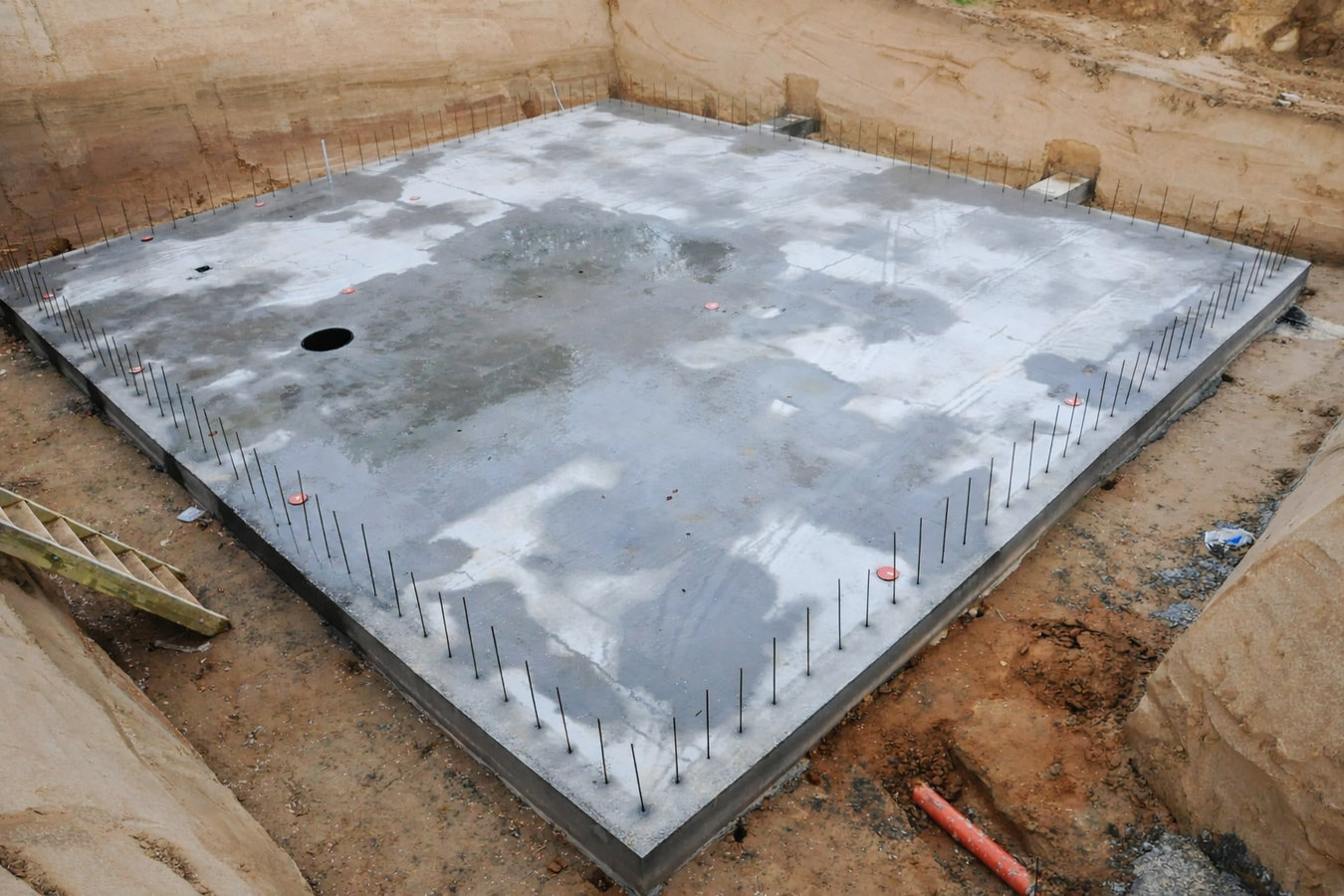
A foundation is the one part of your home that everything else depends on. Whether you are starting a new build or tackling a complex site, get a licensed crew that knows Prescott Valley's soils, climate, and permit process.
Foundation installation in Prescott Valley covers the full process of preparing your lot, forming and pouring the concrete base that your home sits on, and passing the Town's required inspections. Most residential new-builds here use a slab-on-grade foundation - a flat concrete pad poured directly on the compacted ground. Typical residential jobs, once the permit is approved, take one to three weeks from site prep through the pour.
The foundation is the most consequential work that happens on any build. Once the concrete hardens, everything buried under it is permanent - including plumbing rough-in - and fixing a mistake later means cutting through your floor. Prescott Valley's mix of clay soils, seasonal monsoon moisture, and elevation-driven temperature swings makes proper ground preparation and pour timing more important here than in many other parts of Arizona.
For projects where you need a standard flat slab rather than a more complex foundation, our slab foundation building service covers those jobs in detail.
If you are building a new home, detached structure, or major addition, you need a foundation before framing can begin. This is the starting point of every new build, and getting the foundation right is the single most important investment you can make in the long-term stability of the structure.
Diagonal cracks running from the corners of door frames or windows, or long horizontal cracks in drywall, can signal foundation movement. These are different from small hairline cracks that appear as a house settles normally - they tend to be wider, grow over time, or appear in multiple places. In Prescott Valley, clay soils that shift with seasonal moisture changes are a common cause.
When a foundation shifts, the door and window frames shift with it. If doors that used to swing freely now stick or refuse to latch, and you have ruled out humidity swelling (less common in Prescott Valley's dry climate), a foundation evaluation makes sense. The problem tends to get worse over time if the underlying cause is not addressed.
Prescott Valley's monsoon rains can be fast and intense. If water consistently pools against the base of your home's exterior walls rather than draining away, it is saturating the soil beneath the foundation and accelerating the wet-dry cycle that stresses concrete over time. This is especially concerning on lots with clay-heavy soil, which holds water longer than the rocky substrate found elsewhere in the area.
We install foundations for a range of residential projects throughout Prescott Valley - from straightforward slab-on-grade pours for new single-family homes to stepped foundations required on sloped lots. Every job starts with a site visit so we can assess actual soil conditions, determine the right footing depth, and flag any site-specific challenges before work begins. We handle the permit application with the Town of Prescott Valley, coordinate the building inspections, and provide documentation when the work passes final review.
For large commercial projects or multi-unit developments that need more than a residential foundation, we also handle concrete parking lot building and other large-scale flatwork. And if you need to start fresh on an existing property, our slab foundation building service covers the full process for residential pours where a flat site and standard design apply.
Best for flat lots and standard residential new builds where a single-pour concrete pad is the right design.
Best for sloped lots in Prescott Valley hillside neighborhoods where the foundation must follow the grade in levels.
Best for homeowners adding a new structure to an existing property, with the foundation designed to match or tie into the current build.
At roughly 5,100 feet in elevation, Prescott Valley gets winters that most of Arizona does not - hard freezes from November through March that can damage fresh concrete if the crew does not time the pour correctly and protect the surface overnight. Summer afternoons are dry and sunny, which causes concrete to lose moisture too fast and cure unevenly. Experienced local contractors know to use curing compounds designed for high-desert conditions and to schedule pours in the cooler parts of the day during warm months.
The soil picture is equally local. Clay-heavy ground in parts of Prescott Valley swells and shrinks with seasonal moisture changes, which means footings often need to go deeper than they would on stable sandy or gravelly lots. Hillside neighborhoods may sit on or near bedrock, requiring equipment capable of breaking through rock before the site can be graded. Homeowners in Prescott and Sedona face comparable soil and climate variability, and we have worked extensively across those areas as well.
We respond within one business day. After a quick call to understand your project, we schedule a site visit - we need to see your lot and soil conditions before providing any written estimate. The actual ground under your property matters more than any rule of thumb.
We handle the permit application with the Town of Prescott Valley. Permit fees should be included in your contractor's quote. The review typically takes a few days to a couple of weeks depending on current town workload. You do not need to manage any of this paperwork yourself.
Once the permit is approved, the crew clears, grades, and compacts the ground, then sets forms and steel reinforcing bars. In Prescott Valley's dry climate, this stage may also include bringing in fill material if the native soil needs improvement. A building inspector checks this work before any concrete is poured.
The pour is typically done in a single day. We apply a curing compound suited to Prescott Valley's dry air to prevent surface cracking. After the concrete reaches sufficient strength - usually about a week - framing can begin. You receive the inspection sign-off documentation to keep for your records.
Free on-site estimate. We handle the permits and inspections. No surprises.
(928) 458-7263We apply for, track, and close out permits through the Town of Prescott Valley on every foundation job. Unpermitted work is one of the most common deal-killers in Arizona real estate transactions - our permit documentation stays with your home and protects your investment for as long as you own it. Town of Prescott Valley Development Services handles all permit reviews for residential foundation work in Prescott Valley.
Our Arizona Registrar of Contractors license means we meet the state's requirements for experience, insurance, and accountability. You can verify any contractor's status on the ROC website in under two minutes - we encourage you to check. A license gives you real recourse if anything goes wrong, which an unlicensed crew cannot offer.
Prescott Valley's soils vary significantly - clay-heavy flatland lots behave differently from rocky hillside sites. We visit every property before quoting, and our foundation designs reflect what is actually in the ground. The Arizona Geological Survey documents the variability in Yavapai County soils - it is real, and it matters for your foundation's long-term performance.
We schedule pours to avoid monsoon season saturation, summer heat that dries concrete too fast, and winter nights that can damage fresh concrete before it cures. Our crews use curing compounds formulated for the high-desert environment so your foundation gains strength evenly - not just on the surface.
Taken together, these are not just selling points - they are the specific practices that separate a foundation built for Prescott Valley's conditions from one that just happens to be located here. Every homeowner deserves to know the work under their home was done right, and we build in the evidence to prove it.
Large-scale concrete flatwork for commercial lots and multi-unit developments throughout the Prescott Valley area.
Learn MoreStandard residential slab pours for new homes and additions, including permit handling and rebar installation.
Learn MoreSpring and early fall are the best pour windows - reach out now and we will schedule your site visit before those slots fill up.