
Loading...
Serving Prescott Valley, AZ and surrounding areas. (928) 458-7263
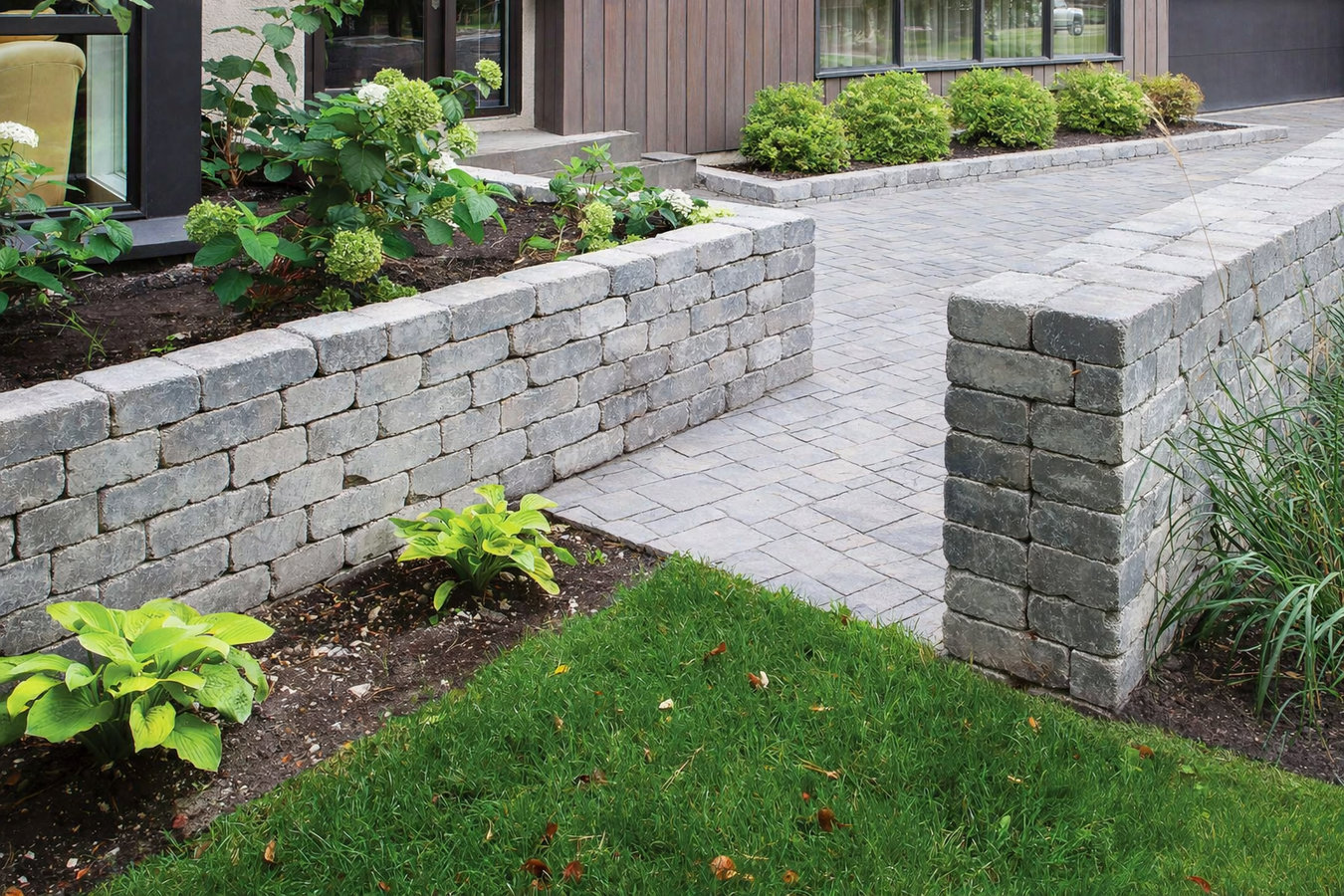
Monsoon rains are washing your slope away. A concrete retaining wall built with proper drainage stops that erosion and gives you flat, usable yard space that lasts.
Concrete retaining walls in Prescott Valley hold back soil on sloped or uneven lots, most jobs running from a few days for a short garden wall to two or more weeks for a taller drainage-intensive structure on a steep hillside.
If your property has a slope that loses soil every monsoon season, a retaining wall is the permanent fix - not erosion fabric, not sandbags, not piling more gravel on the hillside. Concrete retaining walls give you a hard boundary that holds. For homeowners who want the wall surface to blend with their landscaping or home exterior, we can pair the project with our decorative concrete finishes, from staining to stone veneer facing.
Beyond stopping erosion, a retaining wall can turn a steep, unusable backyard into a terraced space where you can put a patio, a garden bed, or anything else you have been putting off because the grade made it impractical.
If you see a trail of dirt or gravel at the bottom of a slope after a monsoon, your hillside is eroding. Prescott Valley storms drop heavy rain fast, and that kind of runoff can remove several inches of topsoil in a single season. Left alone, it exposes roots, undermines structures nearby, and gets worse every year.
A retaining wall that tilts forward or shows horizontal cracks near the base is under more pressure than it was built to handle. This is common in Prescott Valley's clay-heavy soils, which swell after monsoon rains and push against walls that lack adequate drainage. A leaning wall will not correct itself - it will continue to move until it fails completely.
Standing water collecting against your home's foundation after a storm is a sign your yard's grade is directing water toward the structure instead of away from it. A retaining wall combined with regrading redirects that flow. Foundation water damage is one of the most expensive repair categories for Prescott Valley homeowners.
When the soil alongside a driveway or walkway erodes, the concrete edge loses its support and starts to crack or sink. In areas with caliche soil, this can happen faster than expected because the hard mineral layer channels water sideways along the surface. A small retaining wall along the edge stops the process before it requires a full replacement.
We build both poured concrete and concrete block retaining walls, and we handle drainage design as part of every project - not as an add-on. Poured walls are cast in one solid piece and work well for clean, uniform surfaces. Concrete block walls go up course by course, which gives more flexibility on uneven terrain and lets you step the wall to follow your yard's grade. Both are strong, long-lasting options when drainage and footing depth are handled correctly for Prescott Valley's clay and caliche soils.
Every wall we build gets gravel backfill and drainage pipe behind it sized for the water volume your site sees during monsoon season. If your project requires a building permit from the Town of Prescott Valley, we pull it and schedule the inspection - you don't have to chase paperwork. When the project calls for something beyond a plain concrete surface, we also offer concrete floor installation for any adjacent patio or terrace area, and we can pair the wall with concrete footings where structures need to be anchored to the same elevation.
Best for homeowners who want a smooth, uniform surface that can be stained or finished to match a patio or home exterior.
Best for lots with irregular slopes or tight access where the flexibility of a course-by-course build is an advantage.
Best for steep hillside lots where a series of shorter walls creates usable flat areas at different elevations.
Best for front-yard or visible areas where curb appeal matters, using staining or stone veneer over a concrete base.
Prescott Valley sits at roughly 5,100 feet with clay and caliche soils that behave differently from the sandy ground you find in lower-elevation Arizona cities. Clay expands when it gets wet during monsoon season and shrinks when it dries - that cycle puts stress on retaining walls that were not designed for it. Caliche, the hard mineral layer beneath many Prescott Valley yards, affects how deep a footing needs to go and can channel water sideways in ways that undermine walls built with a one-size-fits-all approach. Getting those two factors right from the start is the difference between a wall that lasts decades and one that needs replacement in five years. Homeowners in Cottonwood face similar soil and drainage challenges, and we apply the same site-specific approach there as we do throughout Prescott Valley.
The summer monsoon season is the other piece of context that shapes how we build. Storms here can drop an inch or more of rain in under an hour, and that water has to go somewhere. A retaining wall without adequate drainage behind it is essentially a dam - one that will eventually fail under pressure. We size drainage to handle monsoon-level water volume, not just average rainfall, because that is the real test a wall faces in this climate. We also help homeowners in Camp Verde where monsoon runoff on sloped lots is a recurring problem that keeps coming back until a properly drained wall is in place.
We will ask a few quick questions about your slope, the approximate wall length, and what you are trying to solve. Most retaining wall projects require an in-person visit before we can give you a real number, so we move fast on scheduling.
We walk the property, measure the slope, check soil conditions, and look at drainage patterns. We also identify any utility lines that need to be marked before digging - Arizona law requires this step before any excavation.
For walls that need a permit, we submit to the Town of Prescott Valley and keep you updated on timing - you do not have to chase paperwork. Once approved, we schedule excavation, footing work, and wall construction.
Once the footing cures, the wall goes up with gravel backfill and drainage pipe installed behind it. After inspection closes the permit, we backfill the soil, clean up the site, and walk you through the curing period so you know exactly when it is safe to plant or place loads near the wall.
We will walk your property, explain exactly what your slope needs, and give you a written number before you commit to anything.
(928) 458-7263Every wall we build includes gravel backfill and drainage outlets sized for the volume of water Prescott Valley sees in a heavy monsoon storm - not just average rainfall. That is the condition that actually tests a retaining wall here, and it is what separates a wall that holds from one that fails after the first real storm.
Prescott Valley's clay and caliche soils shift with moisture in ways that crack walls built with generic footing depths. We dig to the depth your specific site requires, accounting for the mineral layers and soil type on your property - not a one-size depth copied from a project in a different climate.
We pull the building permit from the Town of Prescott Valley, coordinate the inspection, and give you a finished project that is on record. An unpermitted wall can complicate a home sale - ours comes with paperwork that shows a town inspector signed off on the work.
Contractors doing structural work in Arizona are required to hold a license through the Arizona Registrar of Contractors. You can look up our license status and complaint history before you sign anything - it is free, public, and takes about two minutes.
Every project we take on in Prescott Valley reflects the same standard: proper drainage, correct footing depth for local soil, and full permit compliance. Those three things are what keep a retaining wall standing for decades instead of failing in a few seasons.
Pour a new concrete floor for the patio or terrace area created behind your retaining wall.
Learn MoreAnchor structures to the same elevation as your wall with precisely poured concrete footings.
Learn MoreSlots fill up fast in spring - call now or submit a request and we will get back to you within one business day with a free on-site estimate.